Marrakech to Merzouga Desert Tour: The Ultimate 3-Day Sahara Guide
Morocco Trip Budget Calculator
Plan your Morocco adventure! Estimate your travel expenses based on your trip length, group size and preferred travel style.
These are illustrative planning estimates based on broad 2026 Morocco travel-cost ranges, not live booking prices.
Accommodation assumes one room per two travelers and one night per travel day. Solo travelers pay for one room.
International flights, intercity transfers, travel insurance, shopping and major tours are not included.
Currency conversions use approximate fixed planning rates, not live exchange rates. Prices vary by city, season and availability.
Marrakech to Merzouga Desert Tour: The Ultimate 3-Day Sahara Guide
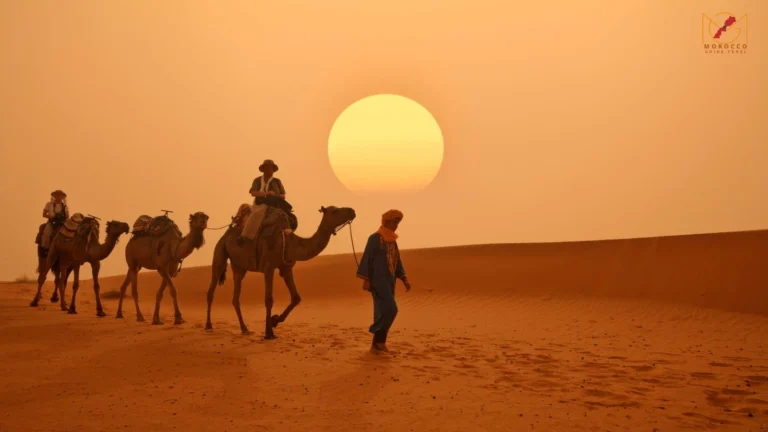
Imagine leaving the lively streets of Marrakech behind, crossing the breathtaking High Atlas Mountains, exploring ancient Moroccan kasbahs, and watching the sun set over the golden dunes of the Sahara Desert.
A Marrakech to Merzouga desert tour is one of the most memorable journeys you can experience in Morocco. Over three days, travelers discover dramatic mountain landscapes, traditional Amazigh villages, palm-filled valleys, spectacular gorges, and the magnificent Erg Chebbi dunes near Merzouga.
The highlight for many visitors is spending a night in a Sahara desert camp, where the surrounding dunes, peaceful atmosphere, and extraordinary night sky create an unforgettable setting.
But planning this adventure requires careful preparation. How far is Merzouga from Marrakech? Is three days enough? How much should you budget? And is a private desert tour worth the extra money?
This comprehensive guide covers everything you need to know about a three-day desert tour from Marrakech to Merzouga, including a realistic itinerary, driving times, accommodation options, activities, costs, packing essentials, and practical booking advice.
A three-day tour from Marrakech to Merzouga is a popular way to experience Morocco’s desert landscapes while discovering some of the country’s most remarkable cultural and natural attractions.
The journey begins in Marrakech, crosses the High Atlas Mountains, continues through the Ouarzazate region and the Dades Valley, and eventually reaches the golden dunes of Erg Chebbi.
Unlike a simple transfer, this route combines sightseeing with the experience of staying overnight in the Sahara.
Marrakech to Merzouga Desert Tour at a Glance
| Travel Detail | Information |
|---|---|
| Departure city | Marrakech |
| Destination | Merzouga and Erg Chebbi |
| Duration | 3 days / 2 nights |
| One-way distance | Approximately 550–560 km |
| Round-trip distance | Approximately 1,100–1,200 km, depending on the route |
| First overnight stay | Dades Valley or nearby |
| Second overnight stay | Sahara desert camp |
| Main attractions | High Atlas, Ait Ben Haddou, Ouarzazate, Todra Gorge, Erg Chebbi |
| Popular activities | Camel trekking, desert photography, sunset and sunrise viewing |
| Best general seasons | Spring and autumn |
| Tour types | Shared group, private tour, self-drive |
The route includes significant driving, particularly on the final day. Three days is enough to reach the dunes and enjoy an overnight stay, but four days offers a more relaxed experience. Morocco Classic Tours+2
Where Is Merzouga, and Why Is It Famous?
Merzouga is a village in southeastern Morocco, near the impressive Erg Chebbi dune field.
The area is famous for its vast golden sand dunes, which attract visitors from around the world.
Erg Chebbi is one of Morocco’s best-known dune landscapes and a popular destination for camel trekking, desert camping, and photography.
Unlike the rocky landscapes around Marrakech, the dunes near Merzouga offer the classic Saharan scenery that many travelers imagine when planning a desert adventure.
What Makes Erg Chebbi Special?
The dunes create a constantly changing landscape.
During sunrise and sunset, the sand can appear golden, orange, or reddish as the light changes.
Visitors can enjoy the desert in several ways, including guided walks, camel excursions, and overnight stays in camps located within or near the dune field.
Merzouga also provides access to the wider Tafilalt region, where oasis settlements, local traditions, and desert landscapes form an important part of southeastern Morocco’s identity. Visit Ouarzazate
3-Day Marrakech to Merzouga Desert Tour Itinerary
The following itinerary follows one of the most common routes used by organized desert tours.
Exact schedules depend on the operator, road conditions, weather, and the number of stops included.
Day 1: Marrakech – High Atlas Mountains – Ait Ben Haddou – Ouarzazate – Dades Valley
Your adventure begins early in Marrakech, typically between 7:00 AM and 8:00 AM.
After meeting your driver or tour guide, you leave the city and head toward the High Atlas Mountains.
The scenery gradually changes from the plains surrounding Marrakech to winding mountain roads, traditional villages, and dramatic valleys.
Stop 1: Cross the High Atlas Mountains
One of the first highlights is the journey across the High Atlas via the Tizi n’Tichka mountain pass.
Located at approximately 2,260 meters above sea level, this pass connects the Marrakech region with the southern side of the mountains.
The road offers remarkable views of rugged peaks, valleys, and mountain settlements.
Travelers may have opportunities to stop at designated viewpoints, depending on weather and traffic conditions.
Travel tip: Mountain roads contain sharp bends, and conditions can change during winter. Travelers prone to motion sickness may want to prepare before departure.
Stop 2: Explore Ait Ben Haddou
After crossing the mountains, the journey continues toward Ait Ben Haddou.
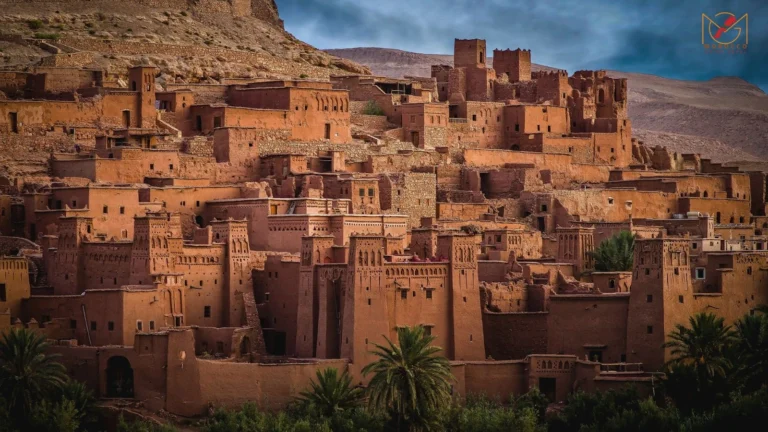
This historic fortified village is one of southern Morocco’s most recognizable architectural landmarks.
Ait Ben Haddou is a traditional ksar, a settlement made up of earthen buildings enclosed by defensive walls.
It was inscribed on the UNESCO World Heritage List in 1987 because of its outstanding example of pre-Saharan earthen architecture. UNESCO World Heritage Centre
Visitors can walk through the settlement, admire the traditional buildings, and discover the architectural character of southern Morocco.
The site has also attracted international film productions, contributing to its reputation as one of the country’s most photogenic destinations.
Allow approximately one to two hours for a visit if your schedule permits.
Stop 3: Discover Ouarzazate
The next major stop is Ouarzazate.
Often associated with Morocco’s film industry, Ouarzazate serves as an important gateway to the country’s southern valleys and desert routes.
The city is known for its kasbah architecture and nearby film studios.
Depending on the tour schedule, travelers may stop for lunch, visit a historic site, or take photographs before continuing east.
Stop 4: Travel Through Skoura and the Rose Valley
Leaving Ouarzazate, the route passes through landscapes characterized by palm groves, earthen kasbahs, and cultivated valleys.
The Skoura oasis is especially known for its palm-filled scenery and traditional architecture.
Further along the route, the area around Kelaat M’Gouna is associated with rose cultivation and locally produced rose products.
The landscape provides an interesting contrast to the mountain scenery encountered earlier in the day.
Overnight in the Dades Valley
The first day usually ends in or near the Dades Valley, where travelers stay in a hotel, guesthouse, or traditional kasbah-style accommodation.
Dinner is often included in organized tour packages, although this should always be confirmed before booking.
After a long day of sightseeing, the evening provides an opportunity to relax and enjoy the peaceful surroundings.
Day 1 summary
| Detail | Estimate |
|---|---|
| Route | Marrakech to Dades Valley |
| Distance | Approximately 320–350 km |
| Driving | Around 6–7 hours, potentially longer with stops |
| Main highlight | Ait Ben Haddou |
| Overnight | Dades Valley accommodation |
Day 2: Dades Valley – Todra Gorge – Erfoud – Merzouga Desert
The second day brings you closer to the Sahara.
After breakfast, the journey continues through the landscapes of southeastern Morocco.
The scenery gradually changes from mountain valleys and cultivated oases to increasingly arid terrain.
Stop 1: Visit Todra Gorge
One of the day’s most impressive attractions is Todra Gorge.
Located near Tinghir, Todra Gorge is famous for its towering limestone cliffs and narrow canyon sections.
Visitors can walk through accessible parts of the gorge, admire the rock formations, and take photographs.
The experience offers a striking contrast to the open desert landscapes waiting further east.
Travel tip: Wear comfortable walking shoes and follow local safety advice, particularly during periods of rain when flash flooding may affect canyon areas.
Stop 2: Continue Toward Erfoud and Rissani
After leaving the Todra area, the journey continues toward the Tafilalt region.
Erfoud is known as a gateway to the desert and for its connection to fossil-rich geological landscapes.
Rissani is historically associated with the Tafilalt oasis and the trans-Saharan trade routes.
Some tours include brief stops in these towns, while others continue directly toward Merzouga to arrive before sunset.
Stop 3: Arrive in Merzouga
As the journey approaches Merzouga, the golden dunes of Erg Chebbi begin to dominate the landscape.
For many travelers, this is the moment they have been waiting for.
The contrast between the surrounding plains and the enormous dunes creates a spectacular first impression.
Depending on your accommodation, you may meet your desert camp team at a designated location before transferring into the dunes.
Experience a Sunset Camel Trek
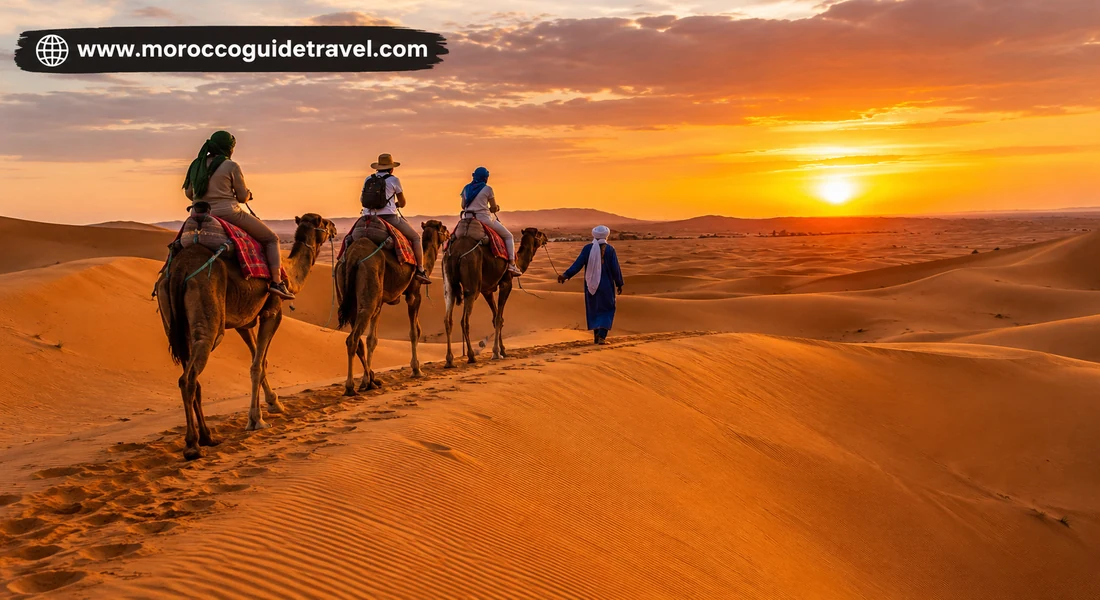
Camel trekking is one of the most recognizable activities associated with Merzouga desert tours.
Many organized packages include a guided camel ride during the late afternoon.
As the sun approaches the horizon, the dunes change color, creating beautiful photography opportunities.
The experience usually involves traveling along designated routes with local handlers.
However, camel riding is not compulsory.
Travelers who prefer not to ride should ask whether the operator offers a suitable vehicle transfer to the camp.
Spend the Night in a Sahara Desert Camp
After sunset, travelers arrive at their desert camp.
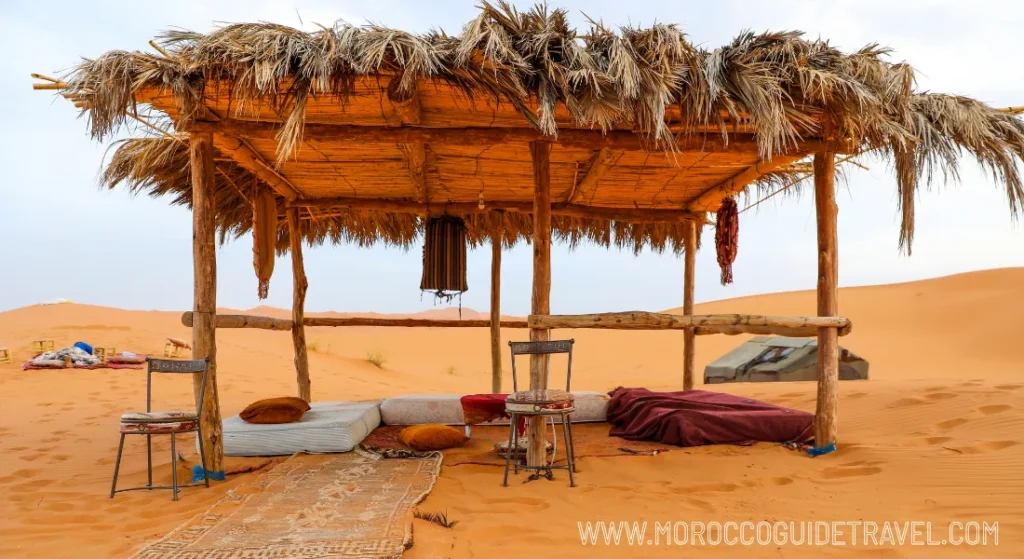
Accommodation ranges from simple tents with shared facilities to more comfortable camps with private bathrooms and permanent beds.
Dinner is commonly served at the camp, and some operators organize music or other evening activities.
On clear nights, the desert can provide excellent opportunities for stargazing, although visibility depends on cloud cover, moonlight, and nearby artificial lighting.
Spending the night in the dunes is often the highlight of the entire Marrakech to Merzouga desert tour.
Day 2 summary
| Detail | Estimate |
|---|---|
| Route | Dades Valley to Merzouga |
| Distance | Approximately 250–300 km |
| Driving | Around 4–6 hours, excluding longer visits |
| Main highlights | Todra Gorge, Erg Chebbi |
| Overnight | Sahara desert camp |
Day 3: Merzouga – Draa Valley – Ouarzazate – Marrakech
The final day begins early, particularly for travelers who want to watch the sunrise over the dunes.
Watch the Sahara Sunrise
Watching the first sunlight illuminate the sand dunes is a memorable way to begin the morning.
The atmosphere is often peaceful, and the changing colors create excellent photography opportunities.
After sunrise, travelers return to the camp for breakfast or prepare for their transfer back to Merzouga, depending on the camp’s arrangements.
Begin the Journey Back to Marrakech
After leaving the desert, the return journey begins.
Some tours follow a southern route through Rissani, Alnif, N’Kob, and the Draa Valley before reaching Ouarzazate.
Other operators retrace sections of the outward journey.
The precise route should be confirmed before booking.
The return trip is long, often taking around 9–11 hours including short stops, and may take longer in poor weather or heavy traffic. River Safari+1
Discover the Draa Valley
When included in the return itinerary, the Draa Valley offers views of palm groves, traditional settlements, and southern Moroccan landscapes.
This region has long been associated with oasis agriculture and historic travel routes.
However, on a three-day tour, time for sightseeing is usually limited because of the distance remaining to Marrakech.
Arrive Back in Marrakech
Most organized tours aim to return to Marrakech during the evening.
Actual arrival times depend on the departure from Merzouga, road conditions, and stops.
Avoid scheduling a flight or other time-sensitive commitment immediately after the expected return.
Day 3 summary
| Detail | Estimate |
|---|---|
| Route | Merzouga to Marrakech |
| Distance | Approximately 550–580 km, depending on route |
| Travel time | Often 9–11 hours including short stops |
| Main highlights | Sahara sunrise and southern Moroccan landscapes |
| Overnight | Return to Marrakech |
Marrakech to Merzouga Desert Tour Route Map
The following map illustrates the main stops along a typical three-day route.
Illustrative itinerary. Actual tour routes, road conditions, stops and travel times vary by operator. The map is a planning aid rather than a confirmed operator schedule.
How Much Does a 3-Day Marrakech to Merzouga Desert Tour Cost?
The price of a desert tour depends on several factors, including group size, accommodation quality, transportation, and included activities.
Shared group tours are generally less expensive per person, while private tours provide greater flexibility and personalized transportation.
Typical Tour Price Categories
| Tour Type | Price Positioning | Main Features |
|---|---|---|
| Budget shared tour | Lower cost | Group transportation and basic accommodation |
| Standard shared tour | Budget to mid-range | Group transport with upgraded camp options |
| Private tour | Higher cost | Dedicated driver and flexible stops |
| Luxury private tour | Premium | Private transportation and upscale accommodation |
As examples of advertised 2026 prices, one operator lists a shared three-day tour from approximately €160 per person, while another advertises private tours from US$450 per person. These are operator-specific starting offers, not verified market averages or guaranteed prices for your dates. Desert Legacy Tours+1
What Is Usually Included?
Many three-day desert tours include transportation, a driver, two nights of accommodation, selected meals, and a camel excursion.
However, inclusions differ significantly between providers.
Common inclusions may include:
- Transportation in an air-conditioned vehicle
- Driver or driver-guide
- One night in the Dades Valley
- One night in a Sahara desert camp
- Breakfast and dinner at selected accommodations
- Camel trekking or an alternative camp transfer
What May Cost Extra?
Before booking, check whether the following are included:
- Lunches and drinks
- Entrance fees
- Optional guided visits
- Private bathrooms or upgraded tents
- Tips
- Optional activities
- Travel insurance
- Airport transfers
Never assume that a package includes all expenses simply because it is advertised as a complete desert tour.
Shared vs Private Marrakech to Merzouga Desert Tour
Choosing between a shared and private tour can make a major difference to your travel experience.
| Feature | Shared Group Tour | Private Tour |
|---|---|---|
| Cost per traveler | Usually lower | Usually higher |
| Departure schedule | Generally fixed | More flexible |
| Sightseeing stops | Group itinerary | Often customizable |
| Transportation | Shared vehicle | Dedicated vehicle |
| Privacy | Limited | Greater |
| Best suited for | Budget and solo travelers | Couples, families, small groups |
When to Choose a Shared Tour
Shared tours are suitable for travelers who want to control their budget and are comfortable following a fixed itinerary.
They can also be a convenient option for solo travelers who enjoy meeting other visitors.
However, the group schedule may limit time at individual attractions.
When to Choose a Private Tour
Private tours are often better for families, couples, photographers, or travelers who want greater control over their schedule.
They may also be more convenient for visitors with specific mobility requirements or those traveling with children.
A private tour does not automatically guarantee better accommodation, so compare the complete package before making a decision.
Standard vs Luxury Desert Camps in Merzouga
Choosing the right desert camp is one of the most important parts of planning your Sahara adventure.
Standard Desert Camps
Standard camps may offer simple sleeping arrangements and shared facilities.
They are suitable for travelers who prioritize the desert experience over luxury amenities.
Facilities vary considerably, so confirm the exact tent configuration before booking.
Luxury Desert Camps
Higher-end camps may provide:
- Private bathrooms
- Comfortable beds
- Larger tents
- Electricity or charging facilities
- More elaborate dining arrangements
- Heating or cooling equipment, where available
The term luxury camp is not a guarantee of specific facilities.
Ask the operator for recent photographs, the camp’s exact name, and written confirmation of amenities.
Important Questions to Ask Before Booking a Camp
Find out whether the camp is located inside the dunes or near their edge.
Also ask how guests reach the camp, whether hot water is available, and what happens during strong winds or adverse weather.
If you have accessibility requirements, request specific information about walking distances, sand surfaces, and bathroom facilities.
Best Time to Take a Marrakech to Merzouga Desert Tour
Merzouga can be visited throughout the year, but temperatures and travel conditions vary considerably.
Spring: March to May
Spring is generally one of the most appealing seasons for desert travel.
Daytime temperatures are often more comfortable than in midsummer, making sightseeing and outdoor activities more enjoyable.
However, wind and blowing sand can occur, and evenings may still be cool.
Summer: June to August
Summer temperatures in southeastern Morocco can become extremely high.
Midday outdoor activities may be uncomfortable or unsafe during intense heat.
Travelers should prioritize hydration, sun protection, and accommodation with suitable cooling arrangements.
Autumn: September to November
Autumn is another popular season for visiting the desert.
Conditions are often more suitable for sightseeing, camel excursions, and outdoor activities than during peak summer heat.
Temperatures can still vary substantially between daytime and nighttime.
Winter: December to February
Winter offers cooler daytime conditions, but desert nights can become very cold.
The High Atlas Mountains may also experience snow and icy roads.
Check mountain road conditions before departure and make sure your accommodation provides adequate bedding and heating.
What to Pack for a 3-Day Sahara Desert Tour
Packing carefully can make the long journey more comfortable.
Essential Clothing
- Lightweight, breathable daytime clothing
- Warm layers for cold evenings
- Comfortable walking shoes
- A light jacket or fleece
- Sunglasses
- A sun hat
- A scarf for wind and dust
Personal Essentials
- Sunscreen
- Refillable water bottle
- Personal medication
- Toiletries
- Power bank
- Phone charger
- Small backpack
- Cash in Moroccan dirhams
Photography Equipment
The Sahara offers excellent opportunities for landscape photography.
A camera or smartphone with sufficient storage is useful, especially during sunrise and sunset.
Protect electronic equipment from blowing sand and avoid changing camera lenses during windy conditions.
What Not to Bring
Avoid carrying excessive luggage into the dunes.
If your main suitcase can remain securely with your driver or at an agreed storage location, a smaller overnight bag may be more practical.
Confirm luggage arrangements with the tour provider before departure.
What to Eat During Your Marrakech to Merzouga Desert Tour
Food is an important part of the Moroccan travel experience.
During the journey, travelers may have opportunities to try traditional dishes in roadside restaurants, kasbah guesthouses, and desert camps.
Moroccan Tagine
Tagine is one of Morocco’s best-known dishes.
It is traditionally prepared in a distinctive cooking vessel and can contain meat, vegetables, spices, and other ingredients.
Common variations include chicken with preserved lemon and olives, or lamb with vegetables.
Moroccan Couscous
Couscous is another important part of Moroccan cuisine.
It is commonly served with vegetables and may include meat, depending on the recipe.
It is especially associated with family meals and Friday traditions.
Moroccan Mint Tea
Mint tea is widely associated with Moroccan hospitality.
It is commonly served in homes, cafés, guesthouses, and traditional accommodations.
Sharing tea can be an enjoyable part of the cultural experience during your journey.
Dining in Desert Camps
Many camps serve dinner as part of the overnight package.
Menus vary, but may include soup, tagine, vegetables, bread, and dessert.
If you follow a vegetarian, vegan, or other special diet, notify the operator before booking.
For more information about traditional Moroccan dishes, ingredients, and culinary traditions, visit MoroccanFoode.com, a website dedicated to exploring the flavors of Moroccan cuisine.
Where to Stay Before and After Your Desert Tour
Marrakech is the most common departure point for this itinerary.
Because desert tours usually leave early, staying in Marrakech the night before departure is advisable.
After returning from Merzouga, consider booking another night in the city rather than arranging an immediate onward flight.
This gives you more flexibility if the journey takes longer than expected.
Choosing Accommodation in Marrakech
The best area to stay depends on your budget and travel preferences.
Traditional riads in the medina are attractive for cultural experiences, while larger hotels outside the historic center may offer easier vehicle access.
If your tour includes hotel pickup, confirm whether the driver can reach your accommodation directly.
For accommodation ideas throughout the country, read our guide to the Best Hotels in Morocco.
Planning Your Arrival in Morocco
International travelers commonly reach Marrakech through Marrakech Menara Airport.
Before booking your desert tour, allow enough time for your arrival, airport transfer, and any possible flight delays.
For information about planning your journey to the country, explore our Flight to Morocco Guide.
Marrakech to Merzouga: 3 Days vs 4 Days
A three-day tour is popular because it fits into shorter vacations.
However, it is important to understand the difference between a quick desert experience and a more relaxed journey.
| Feature | 3-Day Tour | 4-Day Tour |
|---|---|---|
| Sahara camp overnight | Usually included | Usually included |
| Main sightseeing stops | Possible but time-limited | More time available |
| Driving intensity | High | Generally more manageable |
| Flexibility | Limited | Greater |
| Best for | Travelers with limited time | Travelers who prefer a slower pace |
Is Three Days Enough?
Yes, three days is enough to reach Merzouga, experience the Erg Chebbi dunes, and spend a night in the desert.
However, it is a fast-paced itinerary with substantial driving.
Travelers with additional time may prefer four days, especially if they want longer visits to kasbahs, villages, and scenic viewpoints.
Is a Two-Day Merzouga Tour Worth It?
A two-day round trip from Marrakech to Merzouga is generally not recommended because of the distance.
The journey would involve very long driving periods and little time to enjoy the desert.
If you only have one or two days, consider a destination closer to Marrakech rather than attempting to reach Merzouga.
Merzouga vs Agafay Desert: What’s the Difference?
Travelers often confuse the Merzouga dunes with the Agafay Desert near Marrakech.
They offer very different experiences.
| Feature | Merzouga | Agafay |
|---|---|---|
| Landscape | Large Sahara sand dunes | Rocky, arid terrain |
| Distance from Marrakech | Approximately 550–560 km by road | Roughly 30–45 km, depending on destination |
| Typical visit | Multi-day trip | Half-day or overnight |
| Camel experiences | Available | Available at some camps |
| Sahara dunes | Yes, Erg Chebbi | No |
| Best for | Classic Sahara experience | Short escape from Marrakech |
Which Desert Should You Choose?
Choose Merzouga if your dream is to see vast golden sand dunes and spend the night near the Sahara.
Choose Agafay if you have limited time and want to experience a desert-like landscape close to Marrakech.
Agafay is not a substitute for the dunes of Erg Chebbi, but it can be an enjoyable destination in its own right.
Is the Marrakech to Merzouga Desert Tour Safe?
Organized desert tours are a common way to explore southeastern Morocco, but travelers should take sensible precautions.
Choose a Reputable Operator
Look for clear contact information, transparent booking conditions, and recent customer feedback.
Confirm the exact accommodation and transportation arrangements.
Consider Road Safety
The route includes mountain roads, long distances, and potentially changing weather conditions.
An experienced driver familiar with the region is particularly valuable.
Avoid itineraries that rely on excessive driving without appropriate rest.
Prepare for Desert Conditions
Bring water, sun protection, and appropriate clothing.
Desert temperatures can vary significantly, and weather conditions may change quickly.
Follow Your Guide’s Instructions
When exploring dunes or remote areas, remain aware of your surroundings and follow guidance from local professionals.
Avoid wandering far from camp without informing someone.
Arrange Suitable Travel Insurance
Consider insurance that covers medical expenses, trip disruptions, and the activities you plan to undertake.
Check whether camel riding, off-road excursions, or other activities are covered under your policy.
How to Choose the Best Marrakech to Merzouga Desert Tour
Not all desert tours offer the same experience.
Before booking, compare the following details.
1. Confirm the Exact Itinerary
Ask which attractions are included and how much time is allocated to each stop.
A tour that lists many destinations may offer only brief photo stops.
2. Check the Accommodation Names
Request the name of the first-night hotel and the second-night desert camp.
This allows you to research the properties independently.
3. Ask About Group Size
A smaller group may provide a more comfortable experience, particularly during long driving days.
4. Verify the Final Price
Ask for a written list of inclusions and exclusions.
Pay attention to meals, entrance fees, optional activities, and accommodation upgrades.
5. Understand the Cancellation Policy
Check the refund conditions and what happens if severe weather affects the planned itinerary.
6. Read Recent Reviews
Recent reviews can reveal useful information about transportation quality, accommodation, communication, and whether the tour matches its description.
7. Confirm the Return Time
If you have onward travel plans, ask when the tour expects to arrive in Marrakech.
Remember that the return time is an estimate, not a guarantee.
Responsible Travel in the Sahara Desert
The Sahara is a remarkable environment that deserves respect.
Responsible tourism can help protect its landscapes and support local communities.
Travelers can contribute by following a few practical principles:
- Avoid leaving litter in the desert.
- Use reusable water bottles where practical.
- Respect local customs and traditions.
- Ask permission before photographing people.
- Choose operators who treat animals responsibly.
- Avoid unnecessary damage to dunes and vegetation.
- Support locally owned accommodation and services where possible.
When considering camel excursions, observe the animals’ condition and handling practices. If you have concerns, ask for an alternative transfer.
Frequently Asked Questions About Marrakech to Merzouga Desert Tours
How far is Merzouga from Marrakech?
Merzouga is approximately 550–560 kilometers from Marrakech by road, depending on the route. Driving directly can take around nine hours, while sightseeing and rest stops make the journey considerably longer.
Is a 3-day Marrakech to Merzouga desert tour worth it?
Yes, it can be worthwhile for travelers who want to experience the Sahara dunes and have limited time. However, the itinerary involves long driving days, especially on the return journey.
Can you visit the Sahara Desert from Marrakech in one day?
A day trip from Marrakech to the Erg Chebbi dunes near Merzouga is not practical for most travelers because of the distance. Closer destinations such as Agafay are more suitable for short excursions.
What is the best month to visit Merzouga?
Spring and autumn generally offer more comfortable conditions than midsummer. March, April, October, and November are popular choices, although temperatures and weather vary from year to year.
How many nights do you spend in the desert on a 3-day tour?
Most three-day tours include one night in the Dades Valley or nearby and one night in a Sahara desert camp.
Is camel trekking included in a Merzouga tour?
Many organized tours include a camel excursion, but not all packages offer the same activities. Confirm the details before booking.
Can I visit Merzouga without riding a camel?
Yes. Some operators offer vehicle transfers to desert camps. Ask about alternative arrangements before confirming your reservation.
Are desert camps in Merzouga comfortable?
Comfort levels vary considerably. Some camps provide basic tents and shared facilities, while others offer private bathrooms, comfortable beds, and additional amenities.
Does it get cold in the Sahara at night?
Yes. Desert nights can be cold, particularly during winter. Travelers should bring warm clothing and confirm the bedding and heating arrangements at their camp.
Can children join a Marrakech to Merzouga desert tour?
Some tours accept children, but the long driving distances and outdoor conditions may not suit every family. Check age restrictions, vehicle safety arrangements, and accommodation facilities with the operator.
Is a private desert tour better than a shared tour?
Private tours generally offer greater flexibility and privacy, while shared tours are usually more economical. The better option depends on your budget, travel preferences, and group size.
What should I wear on a Sahara desert tour?
Wear comfortable, breathable clothing during the day, sturdy footwear, and appropriate sun protection. Bring warm layers for evenings and colder seasons.
Can I drive from Marrakech to Merzouga myself?
Yes, travelers can reach Merzouga by road. However, the journey involves mountain roads and long distances. Self-driving visitors should plan rest stops, check road conditions, and avoid driving while fatigued.
Is Merzouga better than Zagora?
Merzouga is especially popular for the large sand dunes of Erg Chebbi. Zagora offers a different desert gateway experience and is generally closer to Marrakech. The best choice depends on your available time and the scenery you want to experience.
Final Thoughts: Is the Marrakech to Merzouga Desert Tour Worth It?
A Marrakech to Merzouga desert tour offers one of the most varied travel experiences in Morocco.
In just three days, you can cross the High Atlas Mountains, discover the historic architecture of Ait Ben Haddou, explore dramatic gorges, and spend a memorable night near the golden dunes of Erg Chebbi.
The journey is not simply about reaching the Sahara. The mountain villages, oasis landscapes, historic kasbahs, and local traditions encountered along the way are equally important parts of the experience.
However, travelers should approach the itinerary with realistic expectations.
Three days provides enough time for the main highlights, but the driving can be tiring. If your schedule allows, a four-day journey offers greater flexibility and more opportunities to enjoy the landscapes.
Whether you choose a shared group excursion or a private tour, careful planning will help you make the most of your adventure.
Ready to explore the Sahara? Choose a reputable tour operator, compare accommodation and activity inclusions, and prepare for an unforgettable journey from Marrakech to Merzouga.