Languages in Morocco: A Quick Guide Before You Go
Imagine walking through the bustling souks of Marrakech, where the air is filled with a symphony of languages as diverse and layered as the mint tea served in every café. One vendor greets you in Arabic, another responds in French, while a nearby conversation flows in the melodic tones of Amazigh. This is Morocco—a country where Languages in Morocco creates a vibrant tapestry that can both enchant and confuse visitors navigating its rich cultural landscape.
Many travelers arrive in Morocco wondering which of the official languages of Morocco they should learn, or feeling overwhelmed by the variety of languages spoken in Morocco. The confusion is understandable: Should you brush up on your French? Learn some Arabic? Or perhaps pick up basic Spanish for the northern regions?
This comprehensive Moroccan language guide serves as your essential resource for understanding and navigating Morocco’s complex linguistic landscape. You’ll discover practical communication strategies, cultural insights, and actionable learning tips that will transform your Moroccan experience from confusing encounters to meaningful connections.
Table of Contents
The Vibrant Linguistic Mosaic of Morocco: Unpacking Its Core Languages
Understanding the languages in Morocco requires appreciating how history, culture, and daily life have shaped this unique multilingual environment. Let’s explore each language and its role in modern Moroccan society.
Darija: The Heartbeat of Daily Life
Moroccan Arabic, known locally as Darija, forms the backbone of everyday communication across Morocco. This dynamic dialect differs significantly from other Arabic varieties, incorporating influences from Berber, French, and Spanish that reflect Morocco’s diverse cultural heritage.
Darija is crucial for authentic connections—it’s the language of the markets, neighborhoods, and social gatherings. When you attempt even basic Darija phrases, you’ll notice immediate warmth from locals who appreciate your effort to communicate in their heart language.
Essential Darija phrases for travelers:
- Salam (Hello)
- Shukran (Thank you)
- Fayn (Where)
- Ech Hal (How much)
- Smeetee (My name is)
- Chno Smeetek (what is your name)
Amazigh (Berber): The Ancient Voice & Official Status
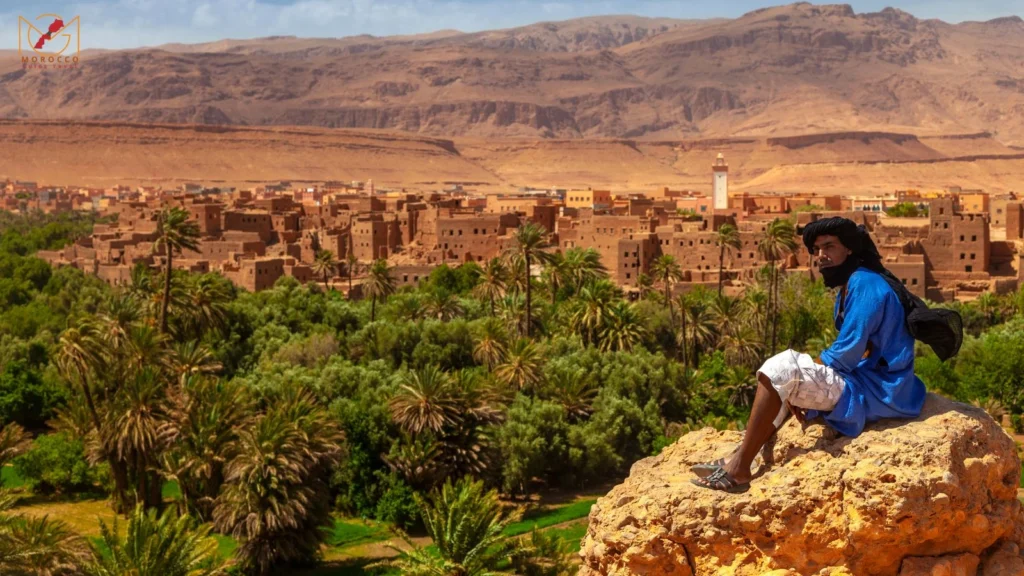
The Berber language in Morocco, officially called Amazigh, represents the country’s indigenous linguistic heritage. Recently recognized as an official language alongside Arabic, Amazigh preserves ancient cultural traditions and identity.
Three main Amazigh dialects dominate different regions:
- Tashelhit in the High Atlas and Anti-Atlas mountains
- Tamazight in the Middle Atlas
- Tarifit in the Rif Mountains
Basic Amazigh phrases include “Azul” (Hello) and “Tanmmirt” (Thank you). The Tifinagh alphabet, used to write Amazigh, appears on official signage throughout Morocco.
Modern Standard Arabic (MSA): The Formal Voice
Modern Standard Arabic serves as the formal, literary language used in official documents, media, and education. However, it’s important to understand that while educated Moroccans comprehend MSA, they typically respond in Darija or French during casual conversations.
French: Morocco’s Unofficial Second Language
France’s historical protectorate has left French deeply embedded in Moroccan society. French dominates business, government, higher education (especially sciences), and urban communication. For travelers, French proves invaluable for reading signs, menus, and navigating cities like Casablanca and Rabat.
Spanish: The Northern Connection
Spanish maintains strong presence in northern Morocco (Tangier, Tetouan, Chefchaouen) and southern regions like Sidi Ifni due to historical Spanish influence. In these areas, Spanish can be useful for reservations, transactions, and directions.
English: The Emerging Global Language
English proficiency is growing rapidly, particularly among young Moroccans in urban and tourist areas. While English can be helpful in major tourist hubs, avoid relying exclusively on it outside these zones.
Decoding Moroccan Communication: Beyond Words
Moroccan culture emphasizes communication that extends far beyond spoken words. Understanding these cultural nuances enhances your travel experience significantly.
The Extended Greeting: A Warm Welcome
Moroccan greetings involve multiple exchanges inquiring about health, family, and work. Common greetings in Darija include:
- “Labas 3lik?” (Are you doing well?)
- “Kolshi bikhir” (All is fine)
- “Mmaline eddar?” (What about the family?)
Non-Verbal Communication Guidelines
Positive gestures:
- Hand over heart after shaking hands (shows sincerity)
- Outstretched thumb to lips (indicates thirst)
- Two index fingers together (means “same” or “friendship”)
Gestures to avoid:
- Raising or lowering the middle finger (considered obscene)
- Forming a circle with thumb and index finger (means “zero” or “bad”)
The Power of Attempting Local Language
Even basic attempts at Darija or French are greatly appreciated and lead to warmer receptions, better service, and deeper cultural connections.
Your Pathway to Fluency: Learning Moroccan Arabic (Darija)
Is Darija Hard to Learn?
Contrary to common misconceptions, learning Moroccan Arabic isn’t as difficult as many assume. While Arabic has a reputation for complexity, Darija is a simplified, conversational version. The main challenge lies in finding quality learning materials, as Darija is primarily a spoken language.
Timeline for Learning Darija
Factors affecting learning speed:
- Time commitment and consistency
- Immersion opportunities
- Learning methods used
Realistic timeline estimates:
- 3-4 months with immersion for conversational level
- 1-3 years of self-study for fluency
Proven Memorization Techniques
Step-by-step learning method:
- Find quality audio material: Moroccan movies with English subtitles, audio lessons
- Write down new words/sentences: Include phonetic spelling and translations
- Record yourself reading notes: Use your phone or laptop
- Listen to your own voice: Daily practice with recorded content
- Restart the process: Maintain consistent daily dedication
Top Resources for Learning Darija
Recommended books:
- Lonely Planet Moroccan Arabic Phrasebook
- A Basic Course in Moroccan Arabic
- The Routledge Introductory Course in Moroccan Arabic
- Peace Corps Moroccan Arabic textbook
Free online resources:
- Loecsen: Visual learning with audio and images
- Speak Moroccan Arabic: Well-organized units for beginners
- The Armchair Arabist: Advanced content with native speaker videos
Practice platforms:
- Italki, Busuu, and Verbling connect learners with native speakers
YouTube channels for immersion:
- Al Aoula TV for drama series and news
- MasterChef Maroc for food and culture content
Your Practical Communication Toolkit for Traveling in Morocco
Essential Travel Phrases
Asking for help:
- “Afak” (Please)
- “Fayn kainn hammam?” (Where is the bathroom?)
Shopping:
- “Ech Hal” or “Bech Hal” (How much?)
Accommodation:
- “Fayn kainn shee hotel?” (Where’s a hotel?)
- “Wash yemkenlee nchouff al beet?” (Can I see the room?)
Dining:
- “Afak jeeblee al menu” (Please bring me the menu)
- “Hada b-nin” (This is delicious)
Leveraging Technology
Google Translate proves invaluable for real-time translation of menus and signs using your phone’s camera.
SIM cards and connectivity: Purchase local SIM cards from Maroc Telecom, Orange, or Inwi for affordable data plans. WhatsApp remains essential for communication with travel companions.
Navigating Language Barriers
Key strategies:
- Practice patience and politeness
- Use gestures and drawings when verbal communication fails
- Ask young people for translation help (higher English proficiency)
- Consider short language classes in major cities for extended stays
Frequently Asked Questions
How many languages are spoken in Morocco? Morocco officially recognizes Arabic and Amazigh, with French, Spanish, and English widely used across different regions and contexts.
What are the top 3 most spoken languages in Morocco? Darija (Moroccan Arabic), French, and Amazigh are the three most prevalent languages.
Is French widely spoken in Morocco? Yes, French is extensively used in business, education, government, and urban areas due to historical ties.
Do I need to know Arabic to visit Morocco? While not essential, learning basic Darija phrases significantly enhances your travel experience and local interactions.
Can I get by with just English in Morocco? English works in major tourist areas, but combining it with French or basic Darija proves more effective throughout the country.
What’s the difference between Darija and Modern Standard Arabic? Darija is the conversational dialect used daily, while Modern Standard Arabic serves formal, literary, and official purposes.
Embrace Morocco’s Linguistic Richness
Morocco’s languages in Morocco create a fascinating cultural mosaic that reflects the country’s rich history and diverse influences. By understanding this linguistic landscape and making the effort to learn basic phrases, you open doors to authentic connections and deeper cultural understanding.
Whether you’re bargaining in the souks, sharing mint tea with locals, or navigating the Atlas Mountains, your linguistic preparation will transform routine interactions into meaningful cultural exchanges. Start with essential Darija phrases, respect local communication customs, and embrace the beautiful complexity of Moroccan multilingualism.
Ready to dive deeper into Morocco’s linguistic world? Share your language learning experiences or questions in the comments below, and let’s continue this conversation about the power of communication in creating unforgettable travel memories.